Prime Minister Shah’s Address at the UN: Let Us Heed the Himalayas’ Warning and Take Action
Addressing the 81st United Nations General Assembly, Prime Minister Balendra Shah drew the international community’s attention to the recent catastrophic floods in Nepal, climate change, and the resulting humanitarian and developmental crises.
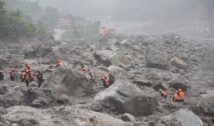
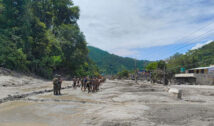
Prime Minister Shah stated that the Bhotekoshi–Trishuli floods serve as a warning not just for Nepal, but for the entire world. Noting that climate change is escalating the risks of floods, landslides, glacial lake outburst floods (GLOFs), and other hazards across the Himalayan region, he emphasized that it is time to move beyond merely hearing warnings to taking immediate action.
He mentioned that the floods claimed at least 1,400 lives with over 6,000 people still missing, adding that the cost of rehabilitation amounts to approximately 10 percent of Nepal’s Gross Domestic Product (GDP).
Pointing out that Nepal pays a heavy price for the climate crisis despite contributing less than 0.1 percent to global greenhouse gas emissions, Shah asserted that climate justice demands greater responsibility from countries with higher emissions and greater capacities.
He proposed the establishment of a Himalayan Climate Resilience Mechanism led by Nepal, India, and China. Through this mechanism, he suggested monitoring glacial lakes, strengthening early warning systems, sharing data and expertise, and coordinating cross-border disaster assistance.
Shah emphasized that poor nations impacted by climate disasters require adequate grant-based support rather than loans, noting that existing climate finance mechanisms remain insufficient. During his address, he also highlighted the need for a just world order, multilateral cooperation, an effective voice for small and poor nations, and reforms in global supply chains.
He stated that his government’s priorities center on decent employment, social security, good governance, and creating opportunities for citizens within the country. Furthermore, he stressed the need to invest in preparedness, resilient infrastructure, insurance, innovation, and early warning systems to tackle climate vulnerabilities.
Concluding his address, he prayed that Lord Pashupatinath bless the welfare of the world and that humanity walks the path shown by the Buddha.
RELATED NEWS